No, liberals were not right about Trump
Contrary to what the catchphrase would have you believe, they were dead wrong.

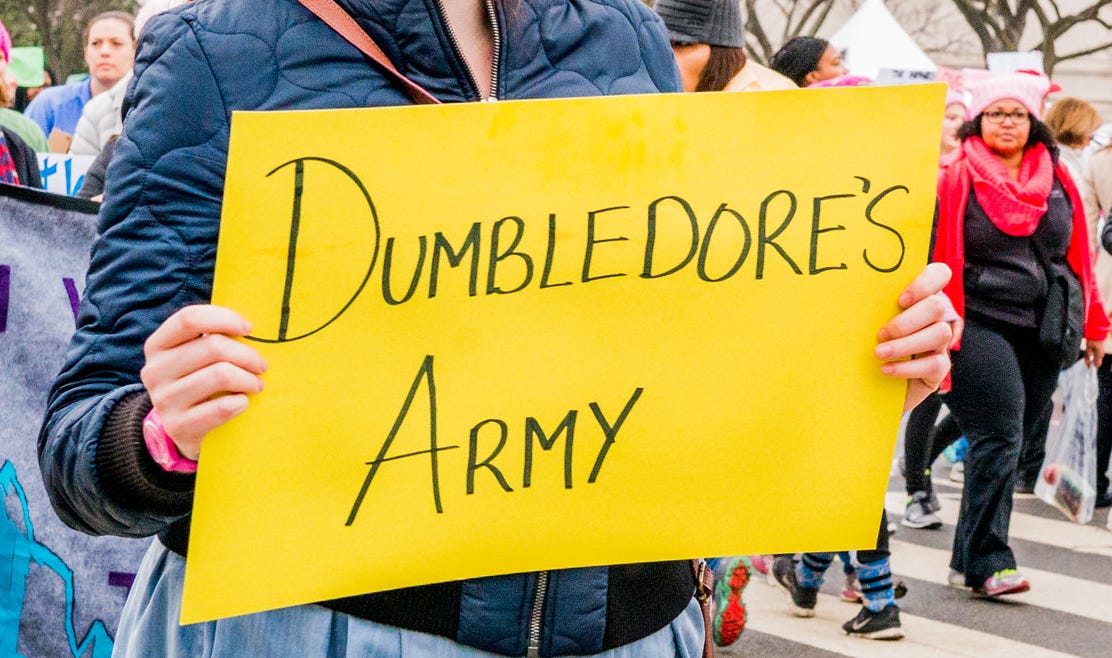
“We really don’t make enough of the fact that the boomer resistance libs were way more correct than everyone else,” Jay Caspian Kang writes. So says Asawin Suebsand, Moira Deonegan, Scott Lemieux, Toby Buckle, and a million other progressive pundits. The sentiment is invariably delivered with the same “nobody is saying this” framing, but you don’t have to look far to see that this, at least, is certainly not true: everyone is saying this. It’s become a catchphrase — and not just among normie libs, but among a whole genre of ambiguously “progressive” types who want to signal their approval of the same liberals they maintain a fashionable distance from.
But there’s a reason why they have to say this — and it’s the same reason that they’re keeping the point so vague. Throughout the Trump era, crucial points of liberal orthodoxy have been discredited over and over and over again. Let’s just look at a few basic questions where liberals got it wrong:
In the wake of Donald Trump’s draconian crackdowns on immigrants and American citizens alike through ICE, nearly 70% of Democrats have come to support its abolition. But that wasn’t always the case: in 2018 when leftists and immigrants rights groups were calling for its abolition only a quarter of Democrats backed this. Conventional wisdom at the time, of course, was that this was an extremist measure that would hurt Democrats at the polls if they backed it. Today, meanwhile, support for ICE’s abolition is still concentrated among the leftmost age demographic — 18-34 — who poll at a margin of 15 points higher than Boomers.
Even today, it is a point of settled doctrine among liberals that Vladimir Putin is one of the most powerful forces in American politics, which today you see in claims like “the Russiagate fanatics were right”. But this is plainly just false. Liberal claims that Russian online influence operations decided the 2016 elections remain completely implausible. Claims that Putin controls Trump’s foreign policy are impossible to square with, for example, Trump greenlighting sanctions on Russia. And constant attempts to cast leftists, up to an including Bernie Sanders himself, as agents of Putin remain too stupid to dignify with a response.
One of the central liberal claims about Trumpism — contra the socialist position that class has played a crucial role in its ascent — is that been that Trumpism is exclusively built on bigotry. Today however it is mostly uncontroversial that Trump’s political power owes significantly to his backing by billionaire oligarchs in Silicon Valley and elsewhere, and that his agenda can quite often be described as “enriching them at the expense of the white working class voters who supported him.”
Even today, a major point of contention between liberalism and the left revolves around our posture towards the right flank of the popular front. In recent months for example I’ve found myself in the habit of pointing out how libertarians like Julian Sanchez and Radley Balko, along with Federalist Society goons like George Conway and neoconservatives like Bill Kristol are using anti-Trump rhetoric to smuggle right-wing positions and ideas into the liberal mainstream — including many of the ones that gave us Trump in the first place. Liberals, meanwhile, remain completely hostile and defensive about this point simply because they prioritize the passing advantages of allying with opportunists to the long-term consequences for American politics.
Finally, on the most important question of how to defeat Trumpism at the polls, liberals have gone 0-3. In the case of Hillary Clinton, they nominated a wildly unpopular opponent who had actually worked to prop Trump up earlier in the election. In the case of Kamala Harris, they nominated (without a real primary) a candidate who has never won a primary vote, and then they pressured her to shift focus away from the populist messaging that might have won to the “defense of democracy” messaging that decisively lost. And finally, while Joe Biden won his election, his lethargic status-quo presidency, revolving almost entirely around liberal priorities, neither beat back the tide of Trumpism nor succeeded in preventing its return.
I could go on, but these five points should be enough to demonstrate that liberals have often not just been wrong about Trump: they have often been badly wrong, and in ways that completely undermine whatever credibility they may have earned from getting some things right.
It’s worth adding that even the things liberals have gotten right about Trumpism have generally not reflected some kind of prescience or insight relative to the left. A common refrain in the discourse, for example, is that liberals were in right about “how bad it would get” in a way that socialists were not.
Consider for example the question of fascism. Liberals have indeed been loud about calling Trump a fascist, and occasionally in the face of skepticism from the left. But leftists have often called Trump a fascist as well — and indeed, many of us were saying so before liberals. More to the point, however, these broad claims about fascism gloss over precisely the sort of crucial questions that leftists were concerned with. For example, as Corey Robin argued, whether Trump was personally a fascist “in his heart of hearts” was a distinct question from whether fascism has achieved the kind of organizational capture and popular support that makes it reasonable to describe his regime as fascist.1 This discourse also elides the basic question of whether Trumpism was always a fascist movement and when it became fascist. I for example happen to agree with Robert Paxton that Trumpism as a movement did not really qualify as fascist until January 6; before then fascism had not achieved the kind of institutional and cultural capture it has today, which is why Trump II feels so different from Trump I. Finally, the debate over fascism is often irrationally equated with a debate over the danger Trump posed or the damage he would cause. A common left position has been that while Trumpism is not fascism in an academic sense, it expresses an intensification of neoliberal trends that is just as dangerous, and that calling it “fascist” has the effect of bracketing Trumpism off from the problems in America that created him. The controversy over “never-Trump” figures like Bill Kristol illuminates this point. Liberals are willing to welcome Kristol and his rhetoric into the fold of respectable politics because they think he had nothing to do with the emergence of Trump. Leftists, meanwhile, see in Kristol’s Islamophobia, his valorization of “the West,” and his militancy against “enemies” like Venezuela and Iran a direct precedent for Trump’s politics today.
Liberal attitudes towards Kristol don’t just suggest a failure to understand the problem of fascism — they also suggest a certain cynicism in the way they use the term. After all, if Kristol’s politics have not actually changed all that much since the Bush era, how can we explain the way that liberals went from calling him a fascist to calling him an anti-fascist? The simplest explanation is just the partisan one: liberals always call every Republican a fascist and make apocalyptic predictions about them, not because they have any real insight into what’s going on, but simply because it makes for good oppositional rhetoric.
So even in their central claim to credibility — their “alarmism” about Trump — liberals can neither say that they were unique in voicing such concerns, nor the first, nor even particularly prescient or insightful. And they can’t say that their opposition strategy has been very effective, either. I’m not saying anything new here, of course: these are all arguments that the left has made for the last decade. But they are not rebutted by vague, self-serving catchphases about how “the libs were right.”
Refer enough friends to this site and you can read paywalled content for free!
And if you liked this post, why not share it?
Of course, liberals seem perfectly capable of making this kind of distinction when they concede that while there are many fascists in Ukraine, this does not mean that fascists have captured enough institutions or won enough popular support to call it a fascist country. But this nuance is always lost in conversations about Trump.


